Summer 2026
Making Room
How a bare cottage patio became an outdoor room—and what the process taught me about rebuilding a life in manageable pieces.
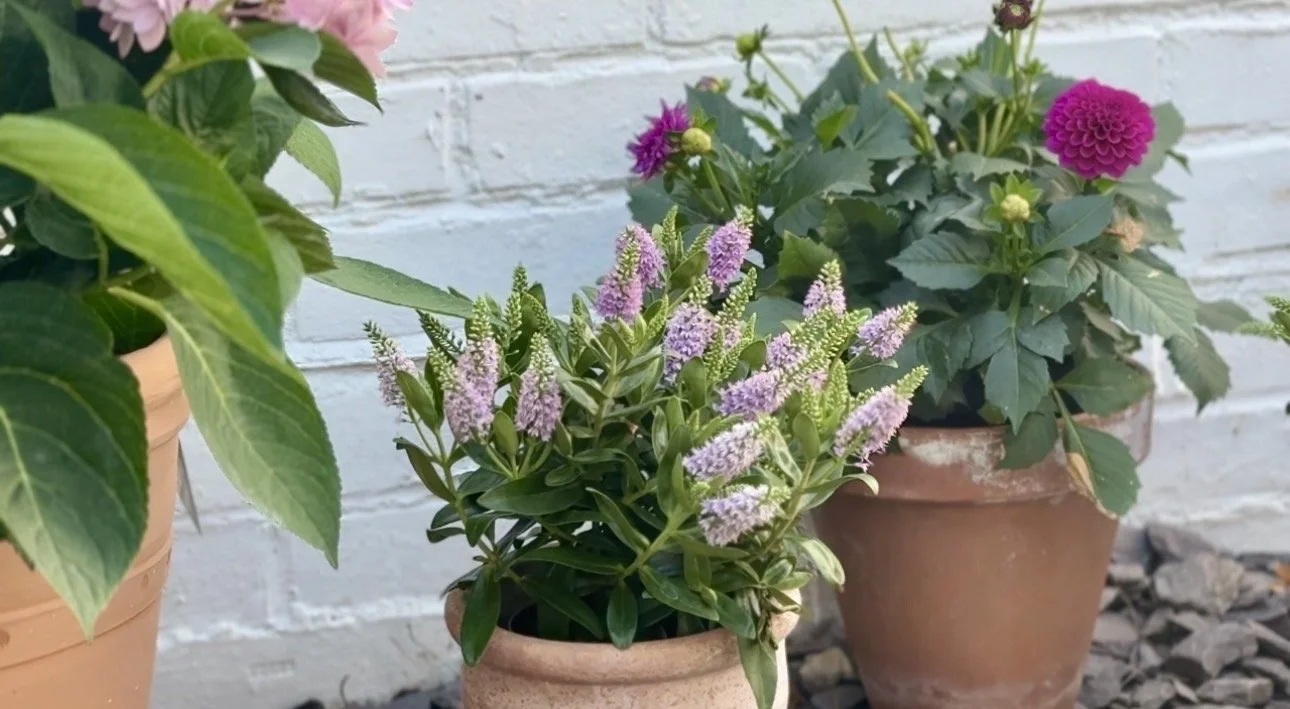
Spring ended with one part of the cottage still waiting.
Inside, the rooms had begun to feel settled. Outside, there was a bare patio: useful in theory, but not yet a place where I wanted to spend any time. I had described it as another room of the cottage, only without a roof. At that point, it was still an idea.
Summer became the season when that idea took shape.
I did not need the patio to look impressive. I wanted it to support a particular kind of life: somewhere to sit with a book, have a cup of tea, eat outside, tend a few plants and enjoy the softer light at the end of the day. In a tiny home, an outdoor space can change far more than the view. It can alter the rhythm of the whole day.
The project unfolded gradually—through visits to local garden centres, plants and terracotta pots, secondhand finds, furniture, lighting, cleaning and rearranging. There was no dramatic weekend transformation. England moved through another heatwave, the work slowed down, and the patio came together in stages.
That turned out to be the most valuable part of it.
The finished space is not meaningful because every detail is perfect. It is meaningful because it was built around the way I actually wanted to live. After returning to England following over three decades in the United States, I have been learning that beginning again rarely happens through one bold decision. More often, it is a collection of manageable choices that slowly begin to support a different life.
This was the summer I saw that lesson move beyond the cottage and into the space outside it.
“A fresh start does not have to be built all at once. It only has to begin supporting the life you want to live next.”
A room without a roof
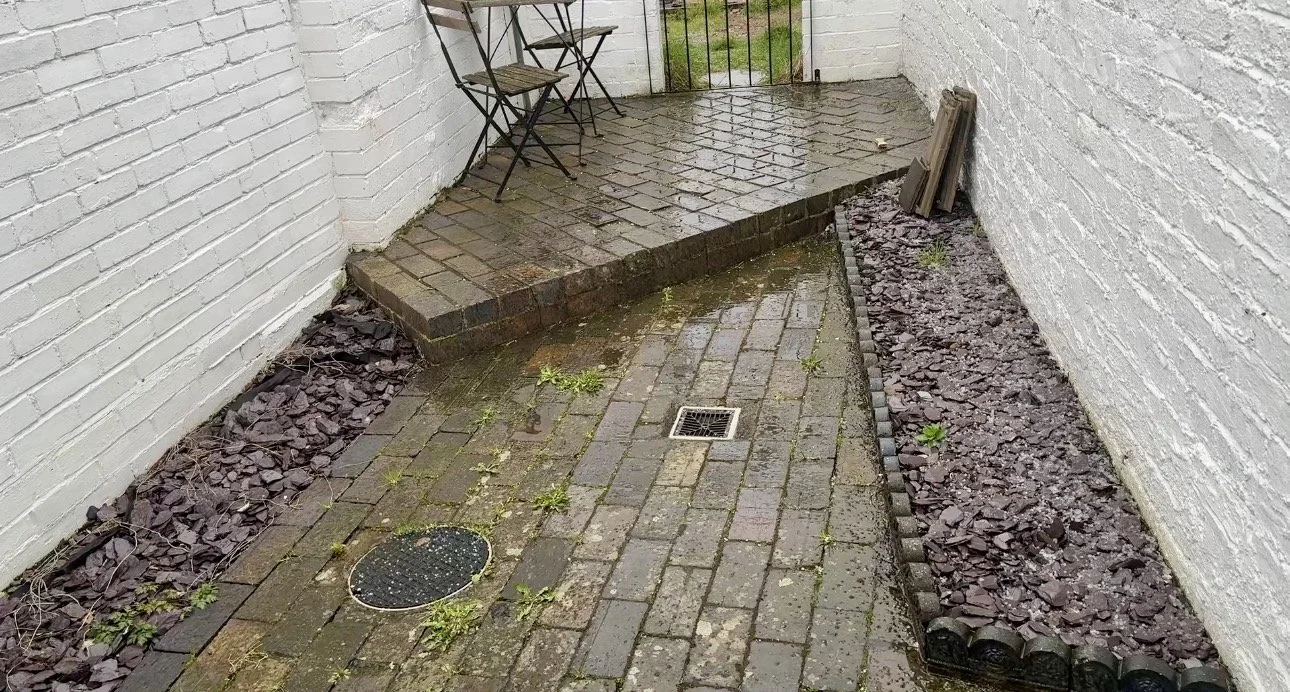
The patio at the beginning of summer, before it became an outdoor room.
Small homes ask us to be deliberate. There is not much room for objects without a purpose, or for areas that never quite earn their place.
The patio needed to do more than look pretty in a photograph. It needed to become somewhere I would use.
That distinction shaped every decision. Before choosing plants or pots, I thought about the moments I wanted the space to hold. A quiet morning. An afternoon cup of tea. A comfortable place to read. Somewhere to sit outside without needing an outing or a special occasion. Gentle lighting when the day began to fade.
Once the purpose was clear, the visual decisions became easier.
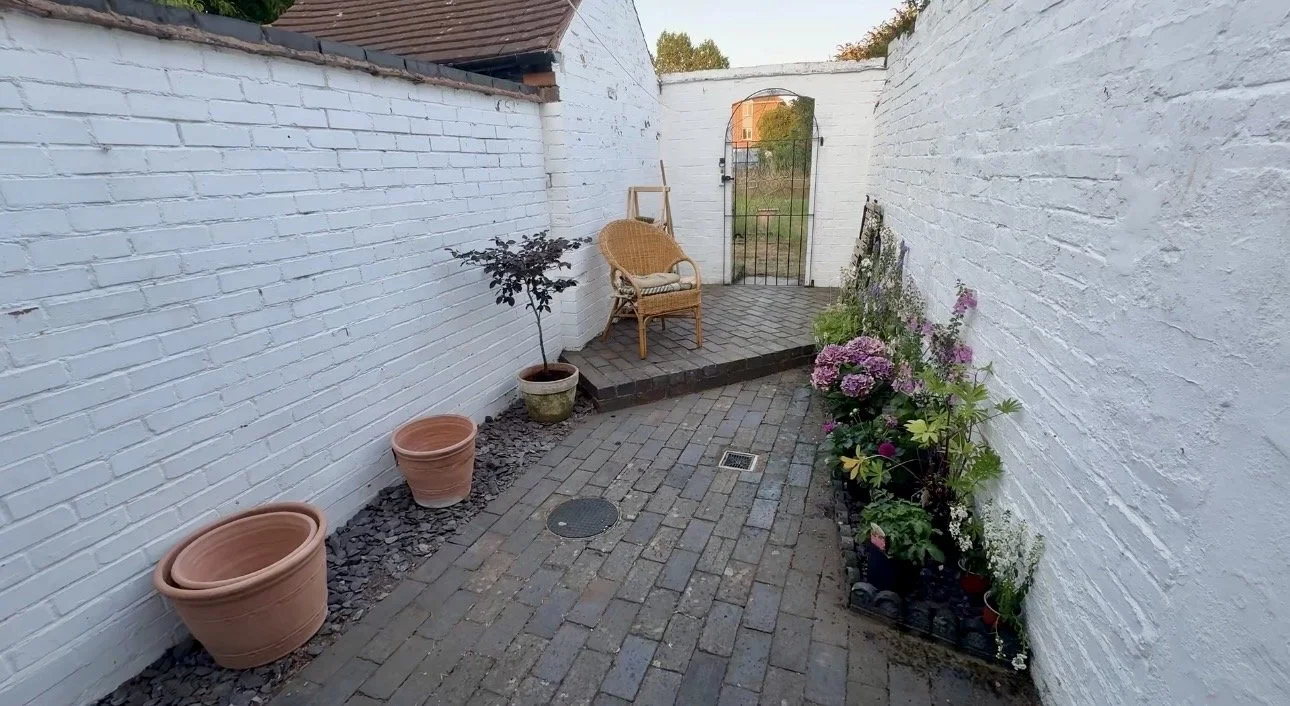
Plants, pots and furniture arrived gradually, allowing the space to take shape over time.
Greenery softened the hard edges of the patio. Terracotta brought warmth. Furniture gave the space a centre, while lighting made it inviting beyond the brightest part of the day. Secondhand finds added character without requiring everything to be bought new or all at once.
Each layer answered a practical question: What would make me sit here? What would make the space feel connected to the cottage? What could survive real weather and real life? What was worth bringing into a very small home?
The result was an outdoor room created through use rather than display.
That is an important difference. A beautiful space may catch our attention, but a supportive one changes our days.
A measured way to make change
The patio gave me a simple process I can now recognise in many of the changes I have made since starting again. It works for a room, a routine, a project or any part of life that no longer feels quite right.
1. Begin with the life, not the look
It is tempting to start with an image: the finished room, the ideal routine, the fully formed version of a new life.
Instead, begin with a more useful question:
What do I want to be able to do, feel or experience here?
For the patio, the answer was not “make it beautiful.” It was “create somewhere peaceful that I will actually use.” Beauty then had a purpose.
2. Choose the change that will matter most
Not every improvement has equal value. One comfortable place to sit may change daily life more than ten decorative additions. One cleared surface may help more than reorganising an entire home. One protected hour may be more useful than an ambitious new schedule.
Find the change that makes the next change easier.
3. Build in layers
The patio did not need every plant, pot, light and piece of furniture on the first day. Living with each stage revealed what was still missing—and what was not needed after all.
Layering is not indecision. It is a way of gathering better information before spending more money, energy or time.
4. Use a mixture of sources
Some things are worth buying new. Some are better found secondhand. Others may already be sitting elsewhere in the house, waiting to be used differently.
The aim is not to spend as little as possible or to avoid buying anything. It is to choose selectively: useful, beautiful pieces that earn their place and work together over time.
5. Let real life set the pace
The heatwave slowed the work. Energy changed from one day to the next. Plans had to fit around ordinary life.
Progress did not stop being progress because it happened more slowly than expected.
A measured pace is not always a gentle, perfectly organised one. Sometimes it simply means responding honestly to the conditions in front of us, then continuing when we can.
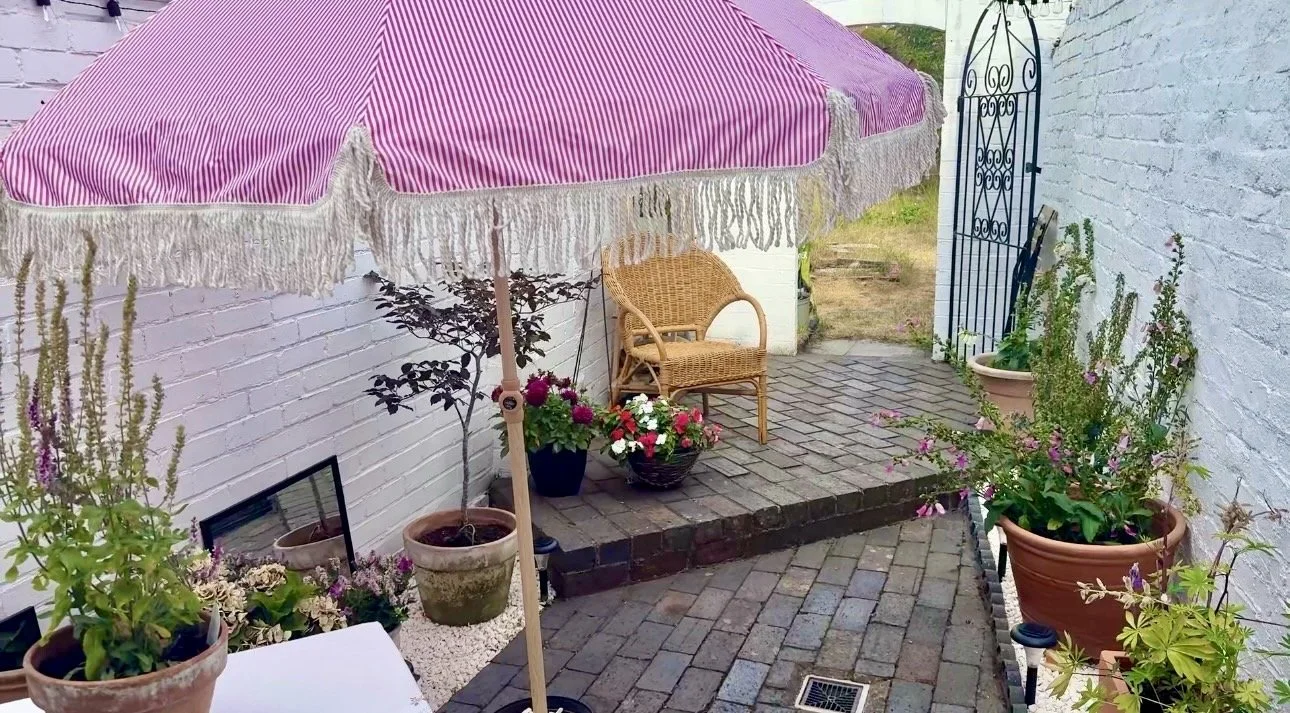
By the end of summer, the once-bare patio had become another room of the cottage.
Summer, as it really was
There is a version of an English summer that exists in photographs: roses around cottage doors, long evenings, picnics and tea outside.
There were days like that.
There were also repeated heatwaves, a tiny cottage that held on to the warmth, tired gardens and plans postponed until the temperature became more manageable. Summer was not one long golden montage. It was beautiful and uncomfortable, expansive and tiring, sometimes all in the same week.
I have never been someone who thrives in intense heat or bright sunshine, so the season asked for a different sort of slowness. Not the styled kind, but the practical kind: doing less in the hottest part of the day, working in shorter bursts, using a fan at night and accepting that some things would have to wait.
Then the rain returned.

The landscape seemed to exhale after the long, dry spell.
The change was immediate—not only in the garden, but in the feeling of the cottage. The air freshened. The plants lifted. The sound of rain outside felt like relief.
It reminded me that seasonal living is not about making every season conform to an ideal. It is about noticing what the season is actually asking of us.
Sometimes that is energy and expansion. Sometimes it is adaptation.
A life expanding in quiet ways
While I was making room outside, The Measured Life was also growing beyond the weekly videos.
This summer I sent the first Monthly Letter and began building the Cottage Library: two ideas that had existed in notes and plans before becoming something I could share. The process felt surprisingly similar to the patio.
First, decide what the space is for.
The Monthly Letter would hold the thoughts, photographs and small details that do not always belong in a video. The Cottage Library would become a useful collection of resources for bringing more intention, beauty and structure to everyday life.
Then, begin with what is possible now.
Neither needed to arrive in its eventual form. They only needed a thoughtful first version—something useful enough to exist, strong enough to learn from, and open enough to grow.
That may be one of the clearest lessons of this whole chapter: we do not have to see the final shape of something before we give it a beginning.

A little of the world just beyond the cottage.
Your companion practice: make one thing more inhabitable
Choose one overlooked place, routine or pocket of time in your own life. It might be a chair no one sits in, an untidy entrance, the first half-hour after work, a neglected garden corner, or a plan that has remained in a notebook for too long.
Do not try to transform it yet. Begin by completing these five sentences:
This part of my life currently feels…
I would like it to help me…
The smallest useful change would be…
I already have something I could use: …
Before the end of this week, I will…
Then give it one hour.
Not a day, not a shopping trip and not a complete reinvention. One hour to clear, move, mend, decide, begin or test.
Live with that first change before adding another. Notice whether it alters what you do—not only how the space or routine looks.
That is the measure that matters.
“Do not ask, ‘Is it finished?’ Ask, ‘Does it support me better than it did before?’”
Seven notes from the season
Visiting local garden centres and discovering that the search can be part of the pleasure.
The warmth of terracotta against the white walls and greenery on the patio.
Facebook Marketplace and thrifted finds that made the space feel collected rather than completed in a single purchase.
Outdoor lights changing the atmosphere as evening arrived.
A heatwave that insisted the project move at a more realistic pace.
The relief of rain after weeks of dry weather.
A late-summer picnic beside a quiet stretch of river—a reminder that a change of scene does not need to be grand to feel restorative.
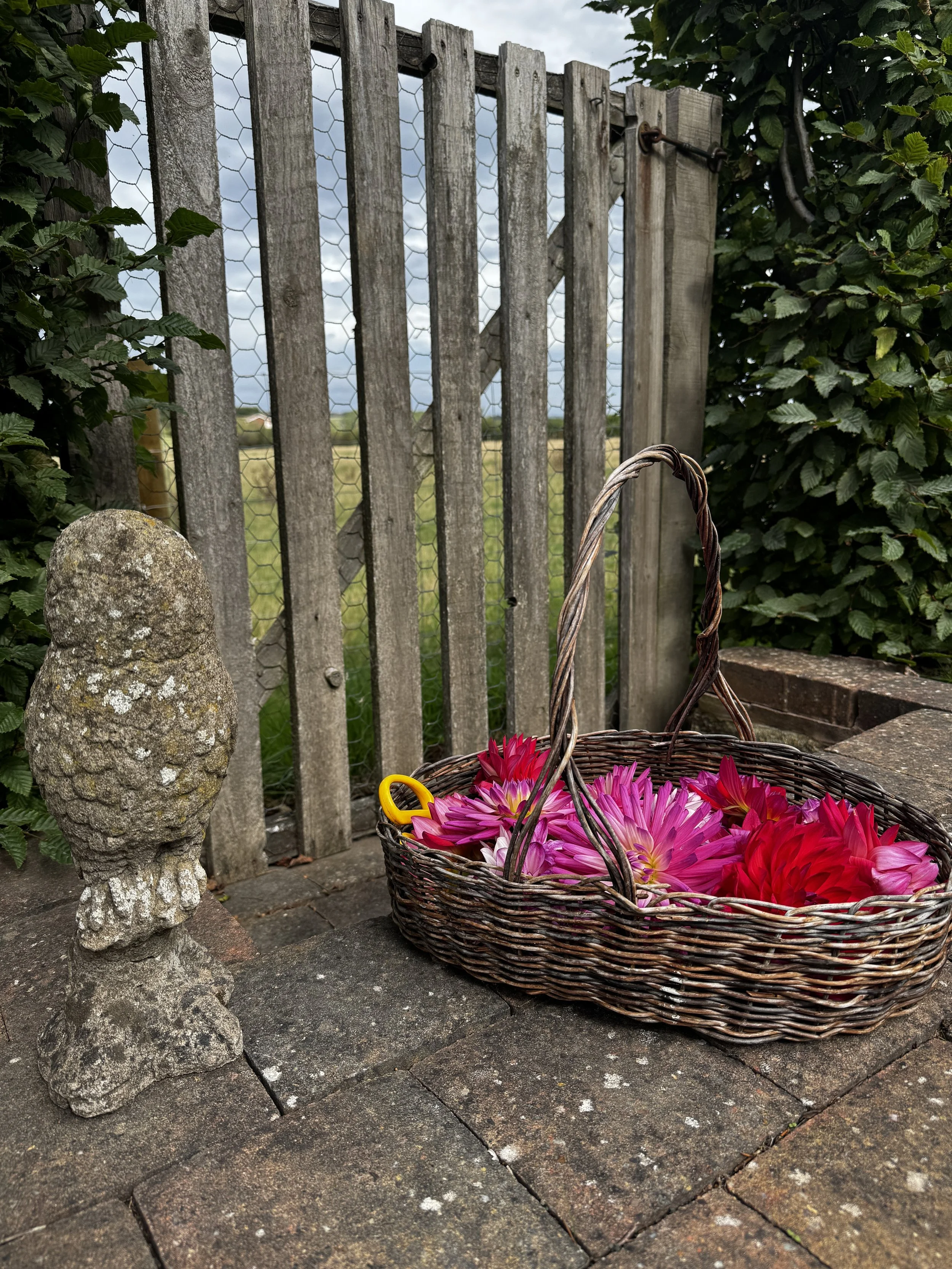
A basket of dahlias gathered at the end of summer.
What I am carrying forward
At the beginning of summer, I thought I was creating a patio.
By the end of it, I understood that I had been practising something larger: deciding how I wanted a part of my life to feel, making one useful choice, living with it, then adding the next.
The patio is not extraordinary because it is large or expensive. It is neither. What matters is that it answers the life I wanted to live there.
Perhaps that is the truest measure of any home—and of any fresh start. Not how impressive it appears, but how faithfully it supports the days we actually have.
As summer begins to give way to autumn, the lights will come on earlier. The plants will change. Cups of tea outside will become less frequent, then stop for a while. But the space will still be there, holding the evidence of what can happen when we stop waiting for one enormous transformation and begin with the next manageable choice.
A few questions to take with you
Where in your life are you waiting for a complete plan before allowing yourself to begin?
What would become easier if one small space or routine supported you better?
Which change would add real value to your days, rather than simply making them look different?
What can you build slowly enough to learn from as you go?
Watch the patio story
If you would like to see the patio come together from the beginning, these are the three chapters of the project:
Part 1 — Beginning My Cottage Patio Makeover →
Continue with The Measured Life
Join the Monthly Letter →
Seasonal reflections, cottage life, books, recipes and the moments that do not always make it into my videos.
Visit the Cottage Library →
Printable resources created to bring more beauty, intention and quiet joy to everyday life.
Shop My Cottage →
Find selected pieces from the cottage, patio, kitchen, wardrobe and everyday life. Some links may be affiliate links, which means I may earn a small commission at no additional cost to you.
